Redefining Digital Fabrication: The Strategic Edge of Roflag Stencil
In the rapidly evolving landscape of digital fabrication, the bridge between high-end design software and physical manufacturing hardware is becoming increasingly seamless. For professionals, entrepreneurs, and creative enthusiasts operating in the realm of signage, custom apparel, and industrial branding, typography is not merely an aesthetic choice—it is a functional constraint. As the maker movement matures into a professional industry, the demand for specialized assets that bridge the gap between creative intent and machine capability has surged. At the forefront of this intersection is Roflag Stencil, a typeface engineered not just for visual appeal, but for the specific mechanics of material removal.
The Physics of Typography in Manufacturing
To understand the relevance of Roflag Stencil, one must first understand the limitations of traditional typography in physical production. Most commercial fonts are designed for digital screens or print media, where closed loops and intricate serifs pose no manufacturing challenges. However, when translating a vector design into a physical object via a vinyl cutter, laser cutter, or CNC machine, the laws of physics intervene.
A standard letter "O," for example, creates a floating island of material in the center. If cut from vinyl, the center falls out; if cut from wood or metal, the letter becomes structurally unstable. Traditional stencil fonts solve this by adding "bridges" or breaks in the letterform to hold the center piece in place. However, these solutions often look utilitarian or jarring.
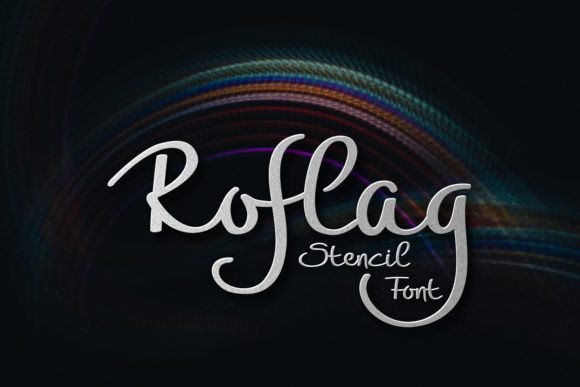
Roflag Stencil addresses this with a sophisticated design philosophy. It is a versatile stencil font that features no closed loops on the characters. This is a critical distinction. By eliminating closed loops entirely through intelligent design, Roflag ensures that every character is structurally sound for cutting machines without relying on clumsy, obvious breaks. It transforms a manufacturing requirement into a stylistic feature, allowing the negative space to flow naturally through the typography.
Aligning with Modern Workflow Expectations
The modern creator’s workflow is defined by versatility and speed. A freelance designer might be working on a branding package for a local brewery in the morning and preparing files for a vehicle wrap in the afternoon. This shift in workloads requires tools that are adaptable.
One of the primary reasons professionals are turning their attention to Roflag Stencil is its extensive library of alternates and ligatures. In the past, stencil fonts were often rigid, offering a single look that could feel repetitive or generic. Roflag disrupts this by providing a vast array of opportunities to change the appearance of the text.
Through the use of OpenType features, users can swap out standard characters for stylistic alternates. This allows for the creation of custom typography that feels hand-crafted rather than mass-produced. For a marketing agency creating a campaign for an industrial client, the ability to toggle between different stylistic sets ensures that the branding feels unique while maintaining the structural integrity required for physical signage.
Practical Application: The Cricut and Silhouette Ecosystem
The democratization of manufacturing hardware has brought devices like the Cricut and Silhouette into home offices and professional studios alike. These machines rely heavily on vector inputs. A common pain point for users of these cutters is "weed time"—the laborious process of removing excess material from a cut design.
Fonts with intricate, closed designs or thin, unsupported serifs can cause the material to tear during weeding, resulting in wasted materials and time. Roflag Stencil is ideal for these cutter machines because its geometry is optimized for easy weeding. The lack of closed loops means there are no floating islands to manage, and the character spacing and line weights are calibrated to ensure clean cuts even on complex materials like heat transfer vinyl (HTV) or adhesive foils.
Integration Across Professional Platforms
For the font to be a viable asset in a professional setting, it must be compatible with the industry-standard software ecosystem. A major factor in the growing adoption of Roflag Stencil is its seamless integration with major design platforms. Whether the user is operating within Adobe programs (Illustrator, Photoshop, InDesign) or Corel programs, the font behaves as a native asset.
This compatibility extends beyond simple installation. Because Roflag Stencil utilizes advanced typographic features, it leverages the specific engines of these programs to deliver its alternates and ligatures. This means a designer can prototype a layout in Illustrator and send it directly to production software without worrying about font substitution errors or missing glyphs. It creates a frictionless pipeline from concept to physical product.
The Business Case for Specialized Typography
Why are businesses and entrepreneurs paying attention to a specific stencil font? The answer lies in brand identity and perceived value. In a saturated market, generic typography signals a lack of attention to detail. Conversely, typography that demonstrates a mastery of the medium—such as a stencil font that looks architectural and intentional rather than broken—elevates the perceived quality of the product.
For signage businesses, Roflag Stencil offers a competitive advantage. It allows for the production of signage that mimics the look of high-end laser-cut metal or routed wood, but at a fraction of the cost using vinyl or stencil masks. This capability enables small business owners to offer premium-looking products to their clients, increasing margins and customer satisfaction.
Future-Proofing Your Design Assets
As we look toward future trends in design and manufacturing, the line between digital assets and physical goods continues to blur. The rise of personalization in consumer goods means that short-run production is becoming the norm. Designers need assets that are scalable and robust.
Roflag Stencil is not just a font; it is a production tool. Its design acknowledges the reality that text often needs to do more than just be read—it needs to be made. By prioritizing structural integrity without sacrificing aesthetic versatility, it meets the changing expectations of a market that demands both beauty and utility.
For the enthusiast or the seasoned professional, the adoption of tools like Roflag Stencil represents a broader shift toward "production-aware" design. It is an acknowledgment that the best design is one that can be successfully realized in the physical world. Whether you are creating stencils for painting, decals for signage, or templates for mixed-media art, the reliability and aesthetic flexibility of Roflag Stencil make it a forward-looking addition to any creative toolkit.
Conclusion
The evolution of typography is driven by the mediums in which it lives. As our mediums shift from purely digital screens to physical fabrication machines, our fonts must evolve as well. Roflag Stencil stands as a testament to this evolution, offering a solution that respects the constraints of the machine while empowering the creativity of the user. It is a vital asset for anyone looking to produce high-quality, physical text-based designs in the modern era.