Clusj Font: A Detailed Review for Design Professionals
In the landscape of digital typography, finding a typeface that balances artistic flair with functional clarity is a persistent challenge for designers. Clusj enters this space as a decorative display font specifically engineered to serve as a focal point in visual compositions. Unlike standard sans-serifs or serifs designed for body text, Clusj is built for high-impact moments where typography must convey personality and energy immediately.
This article provides an objective evaluation of the Clusj font, exploring its design characteristics, technical specifications, and ideal use cases. For designers, brand strategists, and creatives evaluating typefaces for their next project, understanding the specific strengths and limitations of Clusj is essential for making an informed selection.
Design Philosophy and Visual Characteristics
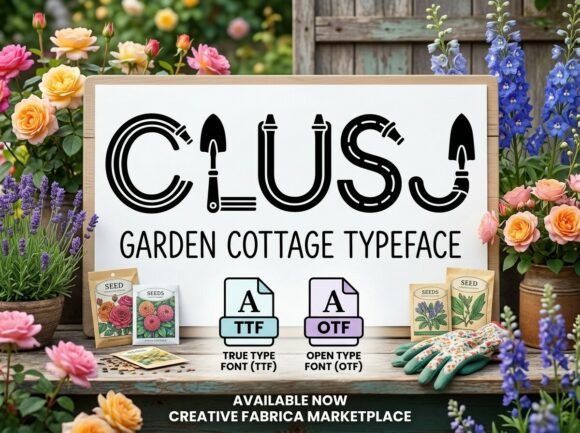
The primary design philosophy behind Clusj is the creation of a "stunning decorative display" aesthetic. The typeface features unique artistic elements that give it a strong visual personality. This is not a font intended to blend into the background; rather, it is designed to break away from the ordinary and command the viewer's attention. The letterforms likely incorporate custom detailing, varying weights, or unconventional structures that distinguish them from standard typographic families.
Despite its artistic nature, the font maintains what is described as a "professional and polished finish." This suggests that while the style is expressive, the curves and lines are refined enough to avoid looking amateurish. This balance is critical for commercial applications where creativity must coexist with brand credibility.
The All-Caps Constraint
A critical technical detail that potential users must evaluate is the font’s character set. Clusj is an ALL-CAPS Uppercase Only display typeface. It does not include lowercase letters. This design choice is common in display typography, as capital letters often provide a more uniform baseline and height, which aids in creating impactful headlines.
However, this limitation fundamentally dictates how the font can be used. It is specifically designed for high-impact headlines, logos, and decorative initials. It is not suitable for writing sentences, paragraphs, or any content where readability over long distances or extended reading periods is required. Designers must plan their layout hierarchy to accommodate this uppercase-only structure, potentially pairing Clusj with a highly legible body font.
Technical Specifications and File Formats
When purchasing and installing Clusj, users receive two primary file formats, ensuring broad compatibility across different design environments:
- OTF (OpenType Font): This is the professional standard for advanced design and layout software. The OTF format is preferred by designers using Adobe Creative Suite (Photoshop, Illustrator, InDesign) or Affinity products, as it supports advanced typographic features and superior rendering.
- TTF (TrueType Font): This format offers universal compatibility. It is the standard file for ensuring the font works seamlessly across various operating systems, devices, and older software versions. This ensures that a design created on a Mac can be rendered correctly on a Windows machine or a web environment without technical glitches.
The inclusion of both formats ensures that Clusj can be integrated into complex workflows, from digital web design to print production, without the need for file conversion.
Evaluating the Use Cases: Is Clusj the Right Fit?
Determining whether Clusj aligns with your project goals requires a practical assessment of your specific needs. The font is versatile enough for several creative applications, but it excels in specific scenarios.
Strong Fits for Clusj
Clusj is a strong candidate for projects requiring a distinct visual signature. Consider this font if you are working on:
- Bold Headlines: For posters, magazine covers, or hero sections of a website where the title needs to anchor the visual hierarchy.
- Artistic Logos: Brands that want to convey creativity, individuality, or a modern aesthetic can leverage the unique letterforms of Clusj to create a memorable mark.
- Creative Packaging: Product packaging often relies on display type to stand out on shelves. The polished finish of Clusj makes it suitable for lifestyle brands, cosmetics, or artisanal goods.
- Decorative Initials: In editorial design, using a drop cap or a stylized initial can break up the monotony of text blocks. Clusj’s artistic elements make it ideal for this purpose.
Scenarios Requiring Alternatives
Conversely, there are situations where Clusj may not be the appropriate tool. If your project involves the following, you should consider alternatives:
- Body Copy: Due to its display nature and uppercase-only limitation, Clusj is unsuitable for long-form text. Reading large blocks of all-caps text is difficult for users and hinders accessibility.
- Data-Heavy Design: If you are designing dashboards, reports, or technical manuals, a neutral sans-serif or monospaced font will offer better legibility for numbers and data points.
- Strict Corporate Formality: While polished, the "artistic" nature of Clusj might clash with conservative corporate environments that require rigid, traditional typography.
Decision-Making Insights
When evaluating Clusj, designers should look beyond the aesthetic appeal and consider the practical workflow implications. Because it is a display font, it functions best as a "accent" typeface rather than a workhorse. A successful design using Clusj will likely pair it with a simpler, highly readable font for secondary information.
Furthermore, the uppercase-only nature requires careful kerning and tracking adjustments. Display fonts often need manual adjustment to ensure the spacing between capital letters feels balanced, particularly in logos. Designers should test the font at the specific sizes they intend to use, as decorative elements that look good at 100pt may become illegible at 20pt.
Conclusion
Clusj offers a specific solution for designers seeking to inject personality and artistic flair into their typography. Its strength lies in its ability to act as a visual anchor for headlines, logos, and packaging. By providing both OTF and TTF files, it ensures professional-grade compatibility.
However, its utility is defined by its constraints. As an all-caps display face, it is a specialized tool, not a general-purpose font. For creators who understand how to leverage display typography to break away from the ordinary while maintaining a professional finish, Clusj represents a viable and effective option for their design toolkit.