Alphabet Tracing: The Foundation for Mastering Handwriting
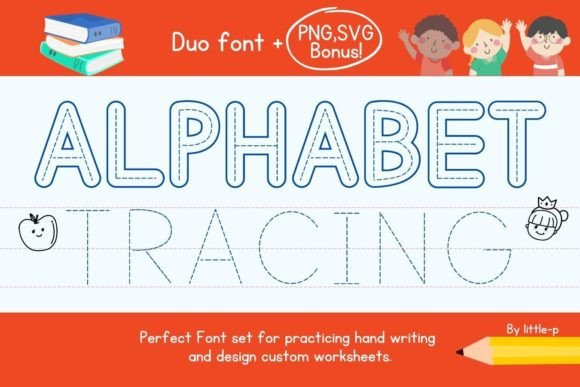
When you think about the early stages of education, few skills are as fundamental as learning to write. Before a child can compose essays or jot down complex notes, they must first master the shape and flow of the alphabet. This is where Alphabet Tracing steps in, not just as a typeface, but as a dedicated educational tool designed to bridge the gap between recognition and production. It is a specialized resource that takes the guesswork out of letter formation, offering a structured path for young learners to follow.
Unlike standard fonts found on your computer or in books, which are designed for reading, Alphabet Tracing is designed for doing. It features clear, unambiguous letterforms that act as a roadmap for the pencil. For educators and parents, this font solves a specific problem: how to create custom materials that guide a student’s hand without causing confusion. It removes the stylistic flourishes and serifs that can confuse a beginner, focusing purely on the essential strokes needed to form each letter correctly.
Why Simplicity Matters in Early Literacy
In a world of endless font choices, you might wonder why a dedicated tracing font is necessary. The answer lies in cognitive load. When a kindergartener looks at a worksheet, their brain is working overtime to distinguish between different shapes. If the font is too decorative, the student spends more time figuring out the shape than learning how to draw it. Alphabet Tracing prioritizes legibility above all else. The lines are clean, and the proportions are standard, ensuring that when a student traces the letter 'a', they are learning the universally accepted form of that letter.
This simplicity is crucial for building muscle memory. Writing is a physical activity as much as it is a mental one. By using a font that provides consistent, clear guides, students develop the hand-eye coordination necessary for fluid handwriting later in life. It is about setting a standard baseline. Once a child masters the basic form provided by Alphabet Tracing, they can later adapt their style to be more personal, but the foundation remains solid.
Practical Applications for Educators and Parents
The versatility of Alphabet Tracing makes it an invaluable asset in various settings. It is not limited to just classroom worksheets; its applications extend into the home and even into creative business ventures.
Creating Custom Worksheets
For teachers, the font is a lifesaver when it comes to creating differentiated instruction. Every class has students at different levels. With Alphabet Tracing, a teacher can quickly generate a worksheet focusing on specific letters that a student struggles with. You can type out a student's name, create lists of sight words, or generate full sentences for advanced practice. This ability to customize content means that learning materials can be tailored to the specific curriculum or the student's interests, keeping engagement high.
Homeschooling and Home Practice
For parents, especially those navigating the homeschooling landscape, this font provides professional-quality structure without the need for expensive curriculum packages. You can design your own daily practice sheets in a word processor. If your child is fascinated by animals, you can create a tracing sheet that says "A is for Alligator" using the Alphabet Tracing font, making the learning experience relevant and fun. It turns the parent into a capable educator, providing the right tools to support their child's development.
Commercial Use for Content Creators
Beyond the classroom, entrepreneurs and content creators in the educational niche can leverage this font to create digital products. Printable worksheet packs are a popular item on marketplaces like Etsy. By using a specialized font like Alphabet Tracing, creators can ensure their products are high-quality and effective. It adds a layer of professionalism that customers—other parents and teachers—look for when purchasing educational resources.
The Added Value of Visual Aids
While the font handles the mechanics of writing, visual association is equally important in early education. This is why the inclusion of free bonus SVG and PNG pictures is such a significant feature of the Alphabet Tracing package. Learning to write shouldn't happen in a vacuum; it needs to be connected to recognition and phonetics.
These graphics serve a dual purpose. First, they aid in letter recognition. A child tracing the letter 'B' is more likely to remember it if they see an image of a Bear or a Ball next to it. Second, the availability of these files in SVG and PNG formats means they are ready for coloring activities. Coloring is a fantastic way to develop fine motor skills, which directly supports handwriting ability. An educator can create a comprehensive lesson plan that involves tracing the letter, coloring the associated image, and then verbally identifying the object. This multi-sensory approach caters to different learning styles—visual, auditory, and kinesthetic.
Integrating Technology with Tradition
We live in a digital age, but the skill of handwriting remains critical for cognitive development. Alphabet Tracing bridges these two worlds. It is a digital asset that facilitates a physical skill. You can use it to create interactive digital worksheets on tablets or print them out for traditional pen-and-paper practice.
For tech-savvy educators, the font can be integrated into presentation software to create slides that demonstrate letter formation to a whole class. For bloggers writing about parenting or education, using this font in graphics can visually communicate the topic of their content instantly. It is a tool that adapts to your workflow, whether you are working on an iPad or a desktop computer.
Considerations Before You Start
While Alphabet Tracing is designed to be user-friendly, there are a few things to keep in mind to maximize its effectiveness. First, consider the progression of difficulty. It is often best to start with uppercase letters, as they are composed of straight lines and simple curves, before moving on to the more complex lowercase letters. Use the font to create sheets that follow this logical progression.
Second, think about the medium. If you are printing worksheets, the quality of the paper matters. Thicker paper prevents ink from bleeding through and provides a better surface for pencil or crayon work. If you are using the font for digital tracing on a tablet, ensure you have a stylus that mimics the feel of a pencil to maintain that muscle memory connection.
Finally, remember that the font is a guide, not a rigid constraint. Encourage students to trace over the lines, but also to practice writing the letters freehand next to the traced examples. The goal is to use the Alphabet Tracing font to build confidence, eventually weaning the student off the guides as they become more proficient.
Unlocking Potential Through Practice
Handwriting is a journey. It starts with scribbles, moves to controlled tracing, and eventually evolves into fluid personal script. Alphabet Tracing is the vehicle for the most critical stage of that journey: the transition from random marks to intentional letters. By providing clear, legible, and accessible resources, it empowers parents to support their children and enables teachers to deliver high-quality instruction.
Whether you are a freelancer designing educational materials, a parent helping with homework, or a teacher preparing for the week ahead, this font offers a practical solution to a universal challenge. It strips away the complexity of typography and focuses on what matters: helping the next generation learn to write. With the added benefit of visual aids for coloring and recognition, it offers a holistic approach to early literacy that is both effective and engaging.